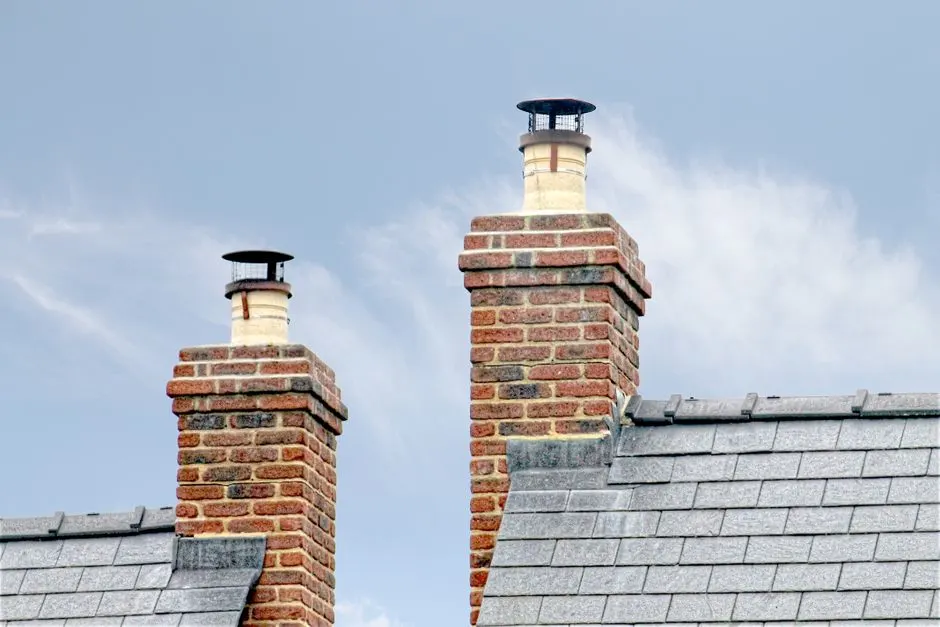
You can tell your chimney crown needs repair in Freehold, New Jersey, if you see hairline or wider cracks across the concrete top, rust stains running down the brick below it, or white mineral streaks on the flue. Those three signs mean water is already getting past the crown and into the masonry. This guide walks through what a crown actually does, the five failure signs we see most often on Freehold roofs, how to check yours without climbing up there, and what 2026 repair pricing looks like in Monmouth County.
What a chimney crown does and why it fails in Freehold
A chimney crown is the sloped concrete cap that sits on top of the brick stack and sheds water away from the flue and the mortar joints below it. It is the single most important piece of waterproofing on your chimney, and it takes more weather abuse than any other part of the structure.
Freehold sits in a freeze-thaw band that runs roughly 100 to 120 cycles per winter. Water soaks into a hairline crack during a 40-degree afternoon, freezes overnight, expands about 9 percent, and pries the crack wider. Repeat that a few hundred times and a crown that was fine five years ago is now a sieve.
Most crowns on Freehold homes built between 1950 and 1990 were poured with a mortar mix, not a proper concrete mix with air entrainment. Mortar crowns crack early. If your home is in the older borough blocks near Main Street or off Route 537, there is a good chance the crown has never been replaced. For homeowners searching for chimney repair across the area, the crown is usually the first thing we look at.
The five signs of chimney crown damage Freehold New Jersey homeowners miss
Signs of chimney crown damage in Freehold, New Jersey, show up in a predictable order: cracks first, then staining, then interior water, then masonry damage, then a full leak. Catching them at stage one or two saves thousands.
1. Visible cracks on the crown surface
Hairline cracks under 1/16 inch are early-stage. Anything you can slide a dime into is advanced. Cracks that radiate from the flue outward are the classic failure pattern because that is where the crown is thinnest.
2. Rust stains on the brick below the crown
If you see orange-brown streaks on the upper brick, water is getting through and oxidizing the metal flashing or the damper assembly. Rust stains are a strong indicator that the crown has been leaking for at least one full season.
3. White mineral deposits (efflorescence)
Efflorescence is the chalky white powder left behind when water moves through masonry and evaporates. On a chimney, it almost always starts at the crown and works downward. If the white staining is concentrated near the top, the crown is the source.
4. Spalling brick and crumbling mortar near the top
When the faces of the top three or four brick courses start flaking off, the crown has been leaking long enough to saturate the masonry. This is where a crown repair turns into Chimney masonry repair in Freehold, New Jersey.
5. Water in the firebox after rain
A wet firebox floor, a rusted damper, or a musty smell in the living room after a storm all point upward. Water entering at the crown travels down the flue and lands in the firebox. If you are seeing this, you likely need Chimney leak repair in Freehold, New Jersey rather than a simple crown patch.
How to inspect your own crown safely
You can inspect your chimney crown from the ground with binoculars in about five minutes, and that is the only inspection we recommend for homeowners. Do not walk a roof in Freehold in October or later - morning dew and early frost make asphalt shingles slick.
Stand back 30 to 40 feet, ideally on the opposite side of the street or from a second-floor window, and look for:
- Cracks wider than a credit card
- Any tilt or separation where the crown meets the flue tile
- Rust or white staining on the top four brick courses
- Missing or crumbling pieces of the crown edge (the overhang)
- Water streaks on the roof flashing around the chimney base
If you see two or more of those, schedule a professional inspection. Our team handles Chimney inspection service in Freehold, New Jersey with a camera down the flue, so you get a full picture of the crown, the liner, and the flashing in one visit.
How much does chimney crown repair cost in Freehold?
Typical 2026 pricing in this area runs $350 to $650 for a crack-seal and resurfacing job, and $900 to $1,800 for a full crown rebuild with a new poured concrete cap. The spread depends on how much of the crown is salvageable and whether the top brick courses need work.
Here is what drives the number up or down:
- Crown size. A standard 13x13 flue crown is at the low end. Oversized crowns on 1800s masonry chimneys cost more in material and labor.
- Access. Steep roofs, slate, or a chimney on the far side of the ridge add setup time.
- Brick condition. If the top three courses are spalled, they get rebuilt first - that is where the $1,800 figure comes from.
- Liner damage. Water that has been getting in for years often damages the liner. That is a separate repair and we quote it upfront.
We give you the price before we start, and the number does not change mid-job unless you approve additional work. If you are comparing quotes, ask whether the bid includes a new drip edge and a flexible sealant at the flue joint - those two details are what make a crown last 15 years instead of 5.
Can I repair a chimney crown myself in Freehold?
You can patch a hairline crack yourself with a tube of polyurethane masonry sealant, and for a small crack that is a reasonable Saturday job. Anything beyond that - a crack wider than 1/8 inch, a crown that has separated from the flue, or visible spalling - is not a DIY repair.
The reasons are practical. A proper crown rebuild requires a sloped form, an air-entrained concrete mix rated for freeze-thaw, and a bonding agent at the flue joint. Roof cement smeared over a crack traps moisture inside and makes the next freeze worse. We have torn out dozens of DIY patches in Freehold that failed within two winters.
If you are not comfortable on the roof, do not go up. The fall risk is real, and a crown repair is not worth a hospital visit.
Common mistakes we see on Freehold chimney crowns
The single most common mistake on Freehold chimney crowns is sealing a crack without addressing the slope. A crown that has settled flat will pool water even after the crack is filled.
Other repeat offenders:
- Painting over efflorescence. The white powder is a symptom, not the problem. Paint traps moisture and accelerates spalling.
- Using mortar instead of concrete. Mortar crowns crack in two to three winters. Concrete with air entrainment lasts 15 to 20 years.
- Skipping the drip edge. Without an overhang, water runs down the brick face and into the mortar joints.
- Ignoring the flashing. A perfect crown on top of failed flashing still leaks. We check both on every job.
- Waiting until spring. A crack that opens in November will be three times wider by March. Fall is the right time to fix it.
If your crown is beyond patching, we handle Chimney crown repair in Freehold, New Jersey with a poured replacement cap and a 10-year workmanship guarantee.
When to call a professional
Call us when you see a crack you can fit a dime into, when the crown has separated from the flue tile, or when you find water in the firebox after a rain. Those three conditions mean the crown has already failed and the damage is spreading into the masonry.
Our technicians at Voltira Labs inspect the crown, the flashing, the liner, and the firebox in one visit, then give you a written price before any work starts. We work on Freehold homes year-round, and we can usually get to a non-emergency crown repair within a week. If water is actively coming into the house, we treat it as an emergency and roll a truck the same day.
Frequently Asked Questions
How do I know if my chimney crown needs repair in Freehold?
Look for cracks wider than 1/16 inch, rust stains on the upper brick, white efflorescence near the top, or water in the firebox after rain. Any two of those together mean the crown has failed and needs repair this season, not next.
What does a damaged chimney crown look like in Freehold New Jersey?
A damaged crown looks like cracked concrete with pieces missing at the edge, often with a visible gap where it meets the flue tile. Rust streaks and spalling brick below it are the tell-tale signs that water has been getting through for at least one winter.
How much does chimney crown repair cost in Freehold?
In 2026, expect $350 to $650 for crack sealing and resurfacing, or $900 to $1,800 for a full crown rebuild. The higher end includes rebuilding the top brick courses and a new poured concrete cap with a drip edge.
Can I repair a chimney crown myself in Freehold?
You can seal a hairline crack under 1/16 inch with polyurethane masonry sealant. Anything wider, or any crown that has separated from the flue, needs a professional rebuild. DIY patches with roof cement trap moisture and fail within two winters.
How long does a chimney crown repair take?
A crack-seal job takes about two hours on site. A full crown rebuild takes four to six hours plus a 24-hour cure before the chimney is back in service. We schedule rebuilds on dry days with at least 48 hours of clear weather ahead.
Get help with Chimney repair in Freehold
If you have spotted cracks, rust stains, or water in the firebox, the crown is the place to start. We will get up there, tell you exactly what is wrong, and fix it before the first hard freeze.
Call Voltira Labs at (844) 803-5147 to schedule your chimney crown inspection in Freehold, New Jersey.