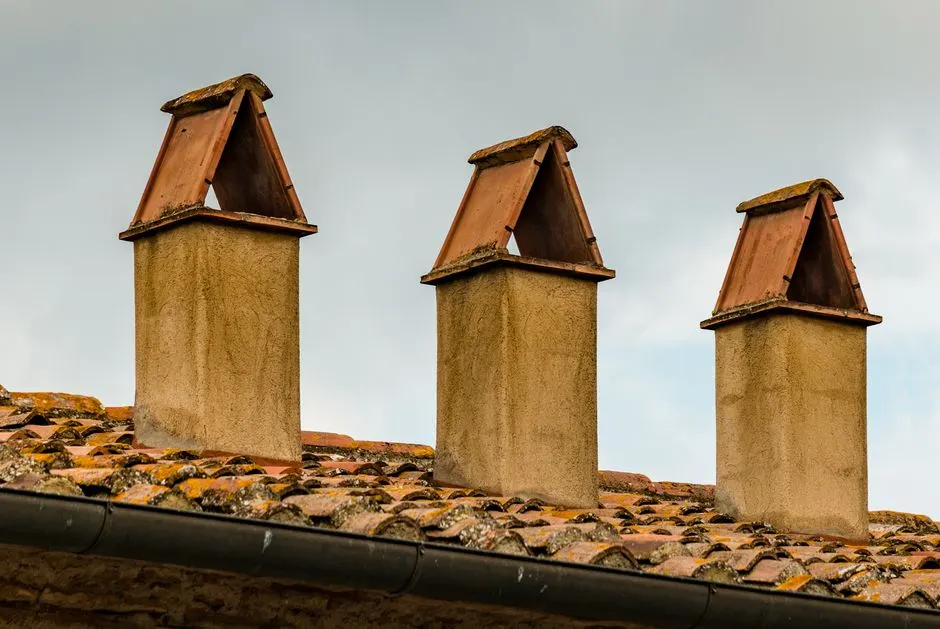
You fix a chimney leak with a new cap by replacing the failed cap with a correctly sized, properly fastened unit that overhangs the flue by at least 2 inches on every side and sheds water away from the crown. In most Freehold homes, that single change stops the drip within one rainstorm. The rest of this post walks through how to confirm the cap is the culprit, how to size the replacement, what installation actually involves, and what it costs in 2026.
We run into this constantly across Monmouth County. A homeowner calls about a water stain on the ceiling, assumes the roof is shot, and it turns out the cap rusted through or blew off in a nor'easter two winters ago. Chimney cap repair Freehold is one of the cheapest fixes in the trade and one of the most effective.
Why a Missing or Damaged Cap Causes Most Chimney Leaks
A chimney cap is a metal or masonry cover that sits on top of the flue and blocks rain, snow, and animals from entering the chimney while letting smoke and gases escape. When it fails, water has a straight shot down the flue and into your firebox, damper, and eventually the ceiling below.
Freehold gets roughly 45 to 50 inches of precipitation a year, and a good chunk of that arrives as wind-driven rain. A cap with a 2-inch overhang handles that. A cap that is rusted, cracked, or missing does not. Water enters the flue, soaks into the smoke shelf, and finds the path of least resistance - usually a ceiling joist or the top of a fireplace insert.
There are three failure modes we see most often:
- Rusted-through steel caps - the single-flue galvanized caps sold at big-box stores last 5 to 8 years in New Jersey's freeze-thaw cycle before the seams open up.
- Missing caps - blown off during a storm and never replaced. Homeowners often do not notice until the first heavy rain after.
- Undersized caps - installed on the wrong flue size, leaving a gap where water sheets in along the side of the flue tile.
If your leak is coming from the sides of the chimney rather than the top, the cap is not your problem - that is usually flashing or masonry. Our team handles Chimney flashing repair in Freehold, New Jersey for exactly those cases, and we will tell you straight which one you have.
How to Tell If Your Chimney Cap Is the Leak Source
You can confirm a cap-related leak in about 15 minutes with a flashlight and a dry day. Look for these signals before you spend money on anything else.
- Water in the firebox after rain. If the firebox is damp but the ceiling around the chimney is dry, the water is coming down the flue - that is a cap problem 9 times out of 10.
- Rust streaks on the damper or smoke shelf. Rust on metal parts inside the chimney means repeated moisture exposure from above.
- Visible cap damage from the ground. Binoculars work fine. Look for missing caps, bent corners, or rust holes you can see daylight through.
- Leak pattern tied to wind direction. If the stain grows only during nor'easters, the cap is not overhanging enough on the windward side.
One caution: a leak that shows up on the ceiling 3 to 6 feet away from the chimney is almost never the cap. That is usually the flashing where the chimney meets the roof. We see it constantly in the older housing stock around Chimney leak repair Freehold calls, and it is a different repair with a different price tag.
What Size Chimney Cap Stops Leaks in Freehold?
A cap that stops leaks in Freehold must be at least 2 inches wider than the flue on every side, and it must be sized to the actual outside dimension of the flue tile - not the inside. Measure the flue tile across its outside edges, then add 4 inches to get the minimum cap width.
Here is what that looks like in practice:
- Standard 8x8 flue tile: a 12x12 cap is the minimum. We install 13x13 stainless units on most Freehold homes because the extra inch handles wind-driven rain better.
- 8x13 or 13x13 flue tile: you need a 12x17 or 17x17 cap. These are common on 1960s and 1970s Freehold ranches.
- Multi-flue chimneys: a single custom cap over both flues beats two individual caps. Fewer seams, fewer leak points.
Material matters as much as size. Galvanized steel is the cheap option and lasts 5 to 8 years here. Stainless steel costs 40 to 60 percent more and lasts 15 to 25 years. Copper is the premium choice and can run 30-plus years, but it is overkill for most homes. We default to stainless on Chimney cap installation in Freehold, New Jersey because the math works out - you pay once instead of three times.
The mesh spark screen matters too. A 3/4-inch stainless mesh keeps squirrels, birds, and raccoons out without clogging with creosote. Cheaper 1-inch mesh lets squirrels through. We have pulled more than one dead squirrel out of a Freehold flue in October - they climb in looking for a warm spot and cannot get back out.
Step-by-Step: How to Fix a Chimney Leak With a New Cap
This is the process we use on every cap replacement, and it is the same one a careful DIYer can follow if they are comfortable on a roof.
1. Get on the roof safely
You need a stable ladder, a roof harness, and a dry day with wind under 15 mph. Chimney work is the leading cause of fall injuries in residential trades. If you are not comfortable at 25 feet, stop here and call us.
2. Measure the flue tile
Measure the outside dimension of the flue tile in both directions. Write it down. Add 4 inches to each number for your minimum cap size. If you have a multi-flue chimney, measure the full footprint of the crown instead.
3. Inspect the crown while you are up there
The crown is the concrete slab on top of the chimney. If it has cracks wider than a credit card, water is getting in there too, and a new cap alone will not stop the leak. That is a Chimney crown repair in Freehold, New Jersey job, and it is worth doing at the same time as the cap so you only pay for one trip up the roof.
4. Remove the old cap
Cut or unbolt the old cap. If it is held with masonry anchors, back them out. If it is a strap-mount, cut the straps with tin snips. Do not pry against the flue tile - you will crack it.
5. Set and fasten the new cap
Set the new cap centered on the flue. Fasten it with stainless steel masonry anchors drilled into the flue tile, or with a bolt-on clamp system if the cap is designed for it. Stainless fasteners only - galvanized bolts rust out in 3 to 5 years and the cap starts rattling in the wind.
6. Seal the perimeter
Run a bead of polyurethane masonry sealant around the base of the cap where it meets the flue. Do not use silicone - it does not bond to flue tile long-term. Let it cure 24 hours before the next rain.
7. Test with a hose
After the sealant cures, run a hose on the roof above the chimney for 5 minutes and watch the firebox. If it stays dry, you are done. If it still drips, the leak is not the cap - it is the flashing or the crown.
If you would rather not be on the roof at all, this is a two-hour job for our crew and we handle the whole thing - cap, sealant, cleanup, and a hose test before we leave. Most Freehold homeowners find that cheaper than buying a ladder they will use once.
How Much Does Chimney Cap Installation Cost in Freehold New Jersey?
Chimney cap installation in Freehold New Jersey runs $250 to $650 for a standard single-flue cap installed, and $600 to $1,400 for a custom multi-flue stainless cap. Those are 2026 prices for this area, including materials, labor, and sealant.
Here is how the numbers break down:
- Galvanized single-flue cap, installed: $250 to $400. Short lifespan, but the cheapest way to stop a leak today.
- Stainless single-flue cap, installed: $400 to $650. Our default recommendation for Freehold homes.
- Custom multi-flue stainless cap, installed: $600 to $1,400 depending on footprint and mesh spec.
- Copper cap, installed: $900 to $2,000. Long lifespan, mostly chosen for appearance on historic homes.
Add $150 to $400 if the crown needs sealing at the same time, and $300 to $900 if the flashing needs to be rebuilt. We give you the full number before we start, and we do not add line items after the fact.
Compare that to the cost of ignoring the leak. Water damage to a ceiling, insulation, and drywall in a Freehold home typically runs $1,200 to $4,000 to repair, and that does not count the mold remediation if it sits for a season. A $500 cap is the cheapest insurance you will ever buy on a chimney.
Common Mistakes We See on Freehold Chimney Caps
We have pulled caps off Freehold chimneys that were installed wrong in ways that made the leak worse. Watch for these.
- Cap sized to the inside of the flue. If the cap sits flush with the flue tile, water sheets down the side. It needs to overhang.
- Galvanized bolts on a stainless cap. The bolts rust first, the cap lifts in a storm, and you are back to a leak within 3 years.
- Silicone sealant instead of polyurethane. Silicone peels off flue tile within 18 months in our climate.
- No spark screen, or mesh too coarse. Squirrels and birds get in, and the flue clogs. We see this most in the wooded lots on the west side of Freehold.
- Capping over a cracked crown. The cap does its job, water still gets in through the crown, and the homeowner thinks the cap failed.
If you have had a cap replaced once already and the leak came back, the cap was probably not the whole problem. Our Chimney repair near me in Freehold, New Jersey service includes a full top-to-bottom inspection so we catch the crown, flashing, and cap issues in one visit instead of three.
When to Call a Professional
Call a professional the moment you are not comfortable on the roof, the leak has already stained a ceiling, or the cap replacement did not stop the water. Those three situations account for nearly every call we get.
There are also specific cases where DIY is a bad idea:
- The chimney is more than 25 feet tall or the roof pitch is steeper than 8/12.
- The flue tile is cracked - a new cap will not fix it, and you need a liner.
- The crown is crumbling or the flashing is visibly lifted.
- You have already replaced the cap once and the leak persists.
Voltira Labs handles cap replacement, crown repair, flashing, and full leak diagnosis across Freehold and the surrounding Monmouth County towns. We show up with the right cap size on the truck, test with a hose before we leave, and give you a written summary of what we found. If the cap is not the problem, we tell you that too - no upsell.
Frequently Asked Questions
Can a new chimney cap fix a leak in Freehold?
Yes, in roughly 70 percent of the cap-related leaks we see. A correctly sized stainless cap with a 2-inch overhang stops top-down water entry within one rainstorm. If the leak continues after a proper cap install, the source is almost always the crown or the flashing, not the cap.
How much does chimney cap installation cost in Freehold New Jersey?
Expect $250 to $650 for a standard single-flue cap installed in 2026, and $600 to $1,400 for a custom multi-flue stainless cap. Stainless lasts 15 to 25 years here; galvanized lasts 5 to 8. The price includes materials, labor, and sealant.
Who installs chimney caps near me in Freehold?
Voltira Labs installs chimney caps throughout Freehold and Monmouth County, usually within a few days of your call. We carry standard stainless caps on the truck for same-visit installs and order custom multi-flue caps when the chimney footprint requires it.
What size chimney cap stops leaks in Freehold?
Measure the outside of the flue tile and add 4 inches. An 8x8 flue needs a 12x12 cap minimum; we typically install 13x13 stainless for the extra wind-driven rain protection. Multi-flue chimneys need a custom cap sized to the full crown footprint.
How long does a chimney cap last in New Jersey?
Galvanized caps last 5 to 8 years in our freeze-thaw climate. Stainless steel lasts 15 to 25 years. Copper can run 30-plus. The fasteners matter as much as the cap - stainless bolts only, or the cap lifts in a storm.
Get Help With Chimney Repair in Freehold
If your chimney is leaking and you want it diagnosed and fixed in one visit, call Voltira Labs at (844) 803-5147. We will confirm whether the cap is the source, size the right replacement, and test it before we leave your roof.