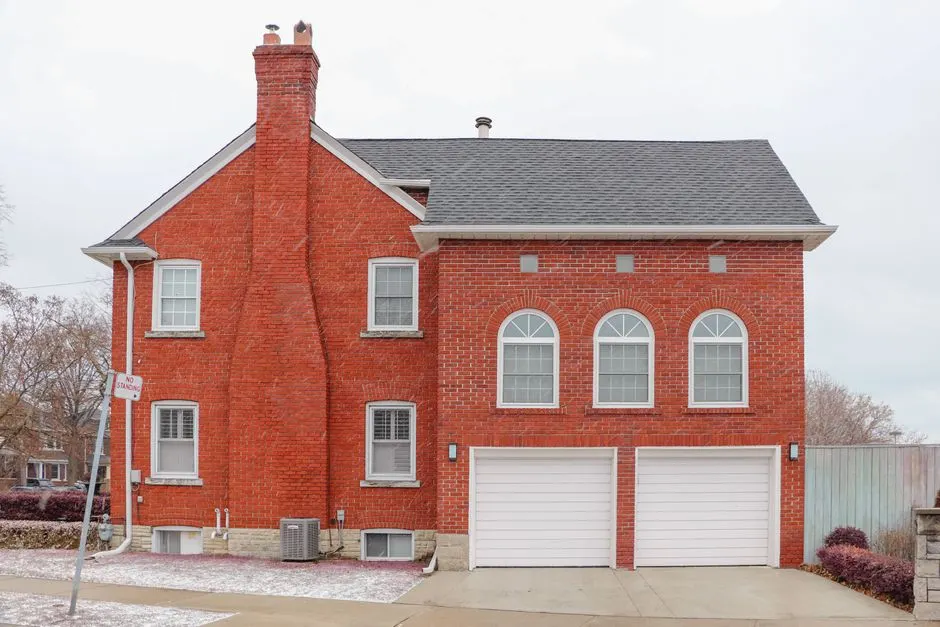
Chimney tuckpointing versus full chimney restoration in Freehold New Jersey comes down to one question: is the damage in the mortar joints only, or has the brick itself started to fail? If the bricks are sound and the mortar is crumbling, tuckpointing is the right fix. If bricks are spalling, the chimney is leaning, or the flue has cracked, you need full restoration.
We've climbed hundreds of chimneys across Monmouth County, and the difference between a $900 repair and a $9,000 rebuild usually comes down to what's happening behind the mortar. This post breaks down what each service actually does, what it costs in 2026, and how to tell which one your chimney needs.
What chimney tuckpointing and full restoration actually are
Chimney tuckpointing in Freehold is the process of grinding out deteriorated mortar from the joints between bricks and packing in fresh mortar to match the original profile. It's a surface-level masonry repair that stops water from getting behind the brick and freezes from splitting the chimney apart.
Full chimney restoration is a different category of work. It means rebuilding sections of the chimney - sometimes just the top few courses, sometimes the whole stack down to the roofline - and often includes a new crown, flashing, and liner. When we restore a chimney, we're replacing the structural elements, not just the mortar between them.
Here's the short version:
- Tuckpointing: mortar joints only, bricks stay, 1-3 day job, $800-$2,500.
- Full restoration: brick and mortar replaced, often with crown and liner work, 3-7 day job, $4,000-$15,000+.
If you're searching for chimney repointing Freehold New Jersey, you're looking at the first category. If your chimney is leaning or the brick face is flaking off in sheets, you're in the second.
How much does chimney tuckpointing cost in Freehold New Jersey?
Typical 2026 pricing for chimney tuckpointing in Freehold runs $800 to $2,500 for a standard single-flue residential chimney, depending on height, access, and how much of the stack needs work. A chimney that only needs the top 10 courses repointed sits at the low end. A full-height repoint on a 30-foot exterior chimney with a steep roof pitch pushes toward the top.
What drives the price:
- Chimney height and roof pitch. A 20-foot chimney on a walkable roof is a half-day job. A 35-foot chimney on a 12/12 pitch needs staging and a harness.
- Mortar matching. Older Freehold homes - especially the 1920s-1950s brick colonials near the downtown historic district - used soft lime mortar. Matching that takes a different mix than modern Portland cement.
- Joint depth. We grind out joints to a minimum of 3/4 inch so the new mortar actually bonds. Shallow cosmetic patches fail within two winters.
Full chimney restoration in Freehold New Jersey typically runs $4,000 to $15,000. A crown-up rebuild on a single-flue chimney lands around $4,000-$6,000. A full tear-down to the roofline with a new liner, crown, and flashing can hit $12,000-$18,000 on a tall masonry chimney.
Those numbers assume the chimney is accessible and the roof isn't being replaced at the same time. If you're already having roof work done, coordinating the two saves money - the roofer is already set up, and we can tie the new flashing into the roof properly. If your chimney is leaking and you're not sure whether the roof or the chimney is the culprit, our Chimney leak repair Freehold team can trace it before you spend money on the wrong fix.
When do I need full chimney restoration in Freehold?
You need full chimney restoration in Freehold when the brick itself has failed - not just the mortar. Tuckpointing a chimney with spalling brick is like painting over rot. It looks fine for one season and then the face pops off again.
Watch for these signs:
- Spalling brick. The face of the brick flakes off, leaving a soft, crumbly core. Once water gets in and freezes, the brick breaks apart from the inside.
- A leaning chimney. If the stack is visibly out of plumb - more than 1 inch of lean over 10 feet - the foundation or the brick below the roofline has failed. Tuckpointing won't straighten it.
- Missing or crumbling crown. The concrete cap on top of the chimney cracks, water runs down the flue, and the freeze-thaw cycle destroys the top courses. If the crown is gone and the top three courses are soft, you're looking at a rebuild.
- Cracked or deteriorated flue tiles. A cracked liner is a fire hazard. If the flue tiles are breaking apart, the chimney needs relining or a full rebuild around a new liner.
- Chunks of brick in the firebox or on the roof. If you're finding pieces of masonry in the firebox, the interior of the chimney is coming apart.
We see this most often on chimneys that haven't been touched in 40+ years. The original mortar was soft lime, it eroded away, water got in, and 20 winters later the brick is shot. At that point, chimney rebuild Freehold New Jersey is the only repair that lasts.
One more thing: if your chimney serves a gas or oil appliance, a failed liner is a carbon monoxide risk, not just a masonry problem. That's a same-week repair, not a wait-until-spring repair.
The inspection that tells you which repair you need
A proper chimney inspection takes about 45 minutes and answers the tuckpointing-versus-restoration question definitively. We look at four things: the mortar joints, the brick faces, the crown and flashing, and the flue interior.
Here's what we're checking:
- Joint depth. We probe the mortar with a screwdriver. If it crumbles to powder at 1/4 inch, the joint is failing. If it's still solid at 1/2 inch, it's holding.
- Brick condition. We tap the brick and look for spalling, cracks, and efflorescence (the white staining that means water is moving through the masonry).
- Crown and flashing. A cracked crown or lifted flashing is the number one source of chimney leaks in Freehold. Fixing those is cheap compared to rebuilding a rotted chimney.
- Flue interior. We run a camera down the flue to check for cracked tiles, gaps at the joints, and creosote buildup.
If the inspection shows sound brick and failing mortar, we tuckpoint. If it shows failed brick, we restore. If it shows a cracked crown and nothing else, we fix the crown and you're done. Our Chimney inspection service Freehold includes photos of everything we find, so you can see the damage yourself before you approve any work.
Common mistakes Freehold homeowners make with chimney repairs
The most expensive mistake is tuckpointing a chimney that needed restoration. It buys you one or two winters, then the brick fails anyway and you've paid twice.
Other mistakes we see:
- Using the wrong mortar. Modern Portland cement is harder than the old brick. It doesn't flex with freeze-thaw cycles, so it cracks and spalls the brick around it. On pre-1960 Freehold chimneys, we use a lime-based mortar matched to the original.
- Skipping the crown. A $400 crown repair prevents a $6,000 rebuild. If the crown is cracked, fix it before you tuckpoint anything else.
- Ignoring the flashing. Water running down the roof meets the chimney at the flashing. If that's failed, no amount of tuckpointing will stop the leak.
- Hiring the cheapest bid. A $500 tuckpointing job usually means the joints weren't ground out properly. The mortar sits on top of the old mortar instead of bonding to the brick, and it falls out within a year.
- Waiting until spring. Water that gets into a cracked chimney in October freezes and expands all winter. By April, the damage is three times worse. Fall is the time to fix it, not spring.
We also see homeowners try to waterproof a chimney that's already failing. Waterproofing is a sealer - it keeps water out of sound masonry. It does nothing for a chimney that's already absorbing water through failed joints. If you want to protect a chimney after tuckpointing, Chimney waterproofing Freehold is the right next step, but it's not a substitute for repointing.
When to call a professional
Call a professional when you see spalling brick, a leaning chimney, chunks of masonry in the firebox, or a cracked flue liner. Those are restoration-level problems, and no amount of DIY mortar will fix them.
You can handle a cracked crown or a loose cap yourself if you're comfortable on a roof. Anything above the roofline that involves grinding joints, matching mortar, or working around a flue is a job for someone with the right tools and insurance. Chimney work is fall-risk work, and the masonry has to be done right the first time because the freeze-thaw cycle will find every weak spot.
At Voltira Labs, we inspect first, show you the photos, and tell you honestly whether you need tuckpointing or a rebuild. We'd rather sell you a $900 repoint than a $9,000 restoration you don't need. If you're not sure which side of the line your chimney is on, that's exactly what the inspection is for.
Frequently Asked Questions
What is the difference between chimney tuckpointing and restoration in Freehold?
Tuckpointing replaces the mortar between sound bricks. Restoration replaces the bricks themselves, often with a new crown, flashing, and liner. If your brick faces are intact, you need tuckpointing. If they're spalling or the chimney is leaning, you need restoration.
How much does chimney tuckpointing cost in Freehold New Jersey?
Expect $800 to $2,500 in 2026 for a standard single-flue chimney. Height, roof pitch, and how much of the stack needs work drive the price. Full-height repoints on tall chimneys sit at the top of that range.
When do I need full chimney restoration in Freehold?
You need restoration when the brick itself has failed - spalling faces, a lean greater than 1 inch per 10 feet, missing crown with soft top courses, or cracked flue tiles. Tuckpointing those chimneys only delays the inevitable rebuild.
Who does chimney repointing near me in Freehold New Jersey?
Voltira Labs handles chimney repointing and full restoration across Freehold and Monmouth County. We grind joints to 3/4 inch, match the original mortar, and photograph every step. Call (844) 803-5147 to schedule an inspection.
Can I tuckpoint my own chimney?
You can, but most DIY jobs fail within two winters because the joints aren't ground out deep enough and the mortar mix is wrong for older brick. If your chimney is more than 10 feet tall or the roof is steep, hire it out.
Get help with Chimney repair in Freehold
Whether you need a straightforward repoint or a full rebuild, we'll tell you which one your chimney actually needs - and show you the evidence before you decide. Call Voltira Labs at (844) 803-5147 to schedule your inspection.